Sunday Scaries for Your Wallet: Timing Crypto Transfers Around Peak Betting Hours
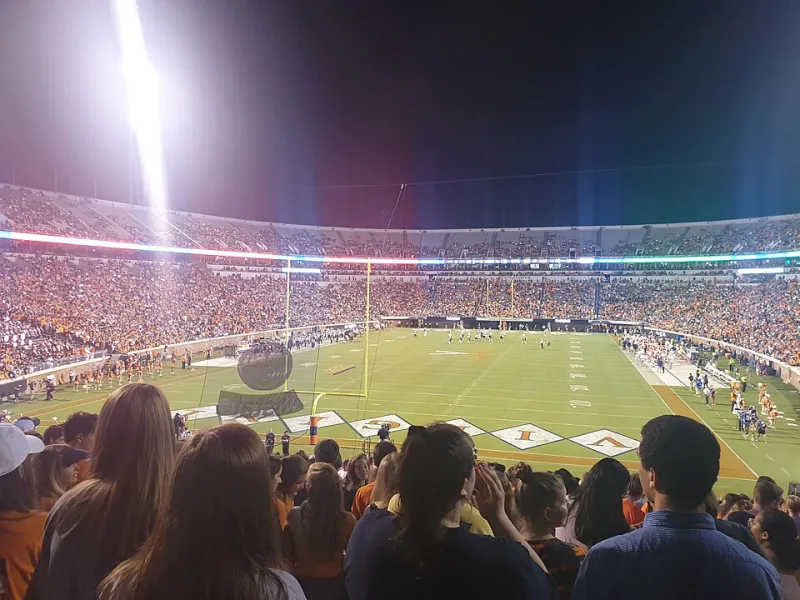
Photo: carlinmack, CC0, via Wikimedia Commons
There's a special kind of pain in paying a $22 gas fee to move $150 of USDT at 12:55 p.m. on a Sunday, right before the 1 o'clock window kicks off. If you've lived it, you already know: network congestion has a schedule, and it maps almost perfectly onto the NFL calendar.
The good news is that gas fees are predictable in a way sports outcomes aren't. Once you understand the rhythm, you can time your transfers to pay a fraction of what the impatient crowd does.
Why Game Day Breaks the Mempool
Blockchains don't have business hours, but their users do. When millions of bettors are topping up accounts, moving winnings, and bridging funds in the same three-hour window, the demand for block space spikes — and fees are just an auction for that space.
The pattern for US bettors is brutally consistent:
- Sunday, 12 p.m.–7 p.m. ET — peak NFL window, peak congestion, peak fees. Ethereum mainnet gas can run 3–5x its weekly baseline.
- Sunday and Monday nights — a second, smaller spike around standalone games.
- Saturday during college football season — the same effect, shifted earlier in the day.
The cruel irony: the fee spike hits exactly when you least want to pay it, because that's when you most want your money on a book.
The Fix: Deposit Like a Scheduler, Not a Gambler
The single highest-leverage habit in crypto betting costs nothing: fund your accounts the night before, or the morning of, before the crowd wakes up.
Gas on Ethereum mainnet is typically cheapest between roughly 2 a.m. and 6 a.m. ET on weekends — US users are asleep, and much of the world's trading volume is quiet. A transfer that costs $15 at 1 p.m. Sunday might cost $2.50 at 4 a.m. Saturday. Same chain, same destination, same money in your account before the early games.
Build it into your routine: Friday evening or Saturday morning, top up every book you plan to bet for the weekend. Then game day is fee-free, stress-free, and you're never transferring in a panic because a line moved.
The Chain You Choose Matters More Than the Hour You Pick
Timing helps, but the bigger lever is the network itself. If your books support them:
- Layer 2s like Arbitrum, Base, or Polygon settle transfers for cents at any hour, including Sunday peak. Congestion exists, but the ceiling is a dime or two, not twenty dollars.
- Solana and Tron keep stablecoin transfers cheap around the clock, which is why so many betting bankrolls live on USDT rails there.
- Bitcoin sits in the middle — Lightning transfers are fast and cheap, but on-chain BTC during peak hours is slow and expensive.
The optimal setup is boring and effective: stablecoins on a low-fee chain, moved during off-peak windows, arriving at your books hours before you need them.
A Quick Game-Day Checklist
- Friday night: rebalance and top up all books for the weekend.
- Saturday morning: final top-ups during the low-fee window if you missed Friday.
- Sunday: no transfers. Anything you need to move mid-Sunday should be treated as an emergency — and priced like one.
- Monday morning: sweep winnings back to your wallet while gas is cheap and the weekend crowd is at work.
Betting is about edges, and most edges are small. Paying $2 instead of $20 to fund your account doesn't win you a bet — but over a season, it's the difference between a bankroll that compounds and one that quietly bleeds. Beat the mempool, then beat the book.