When the Exchange Breaks: Turning Crypto Market Chaos Into a Betting Advantage

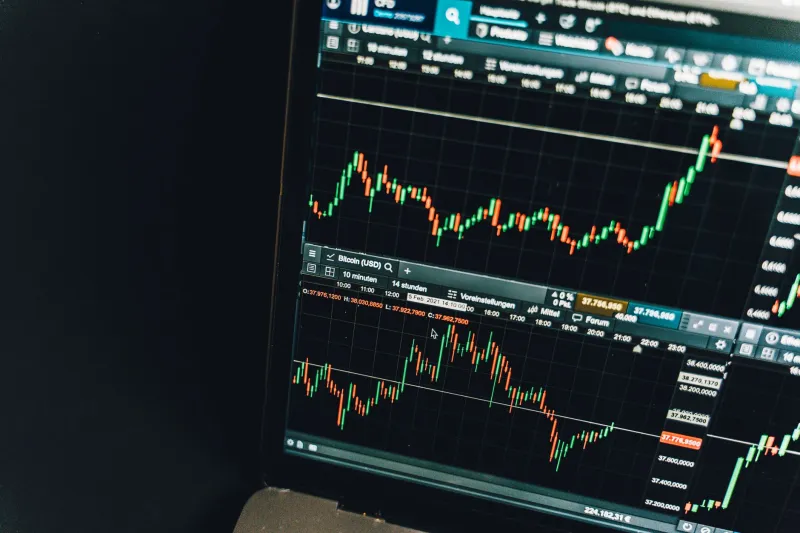
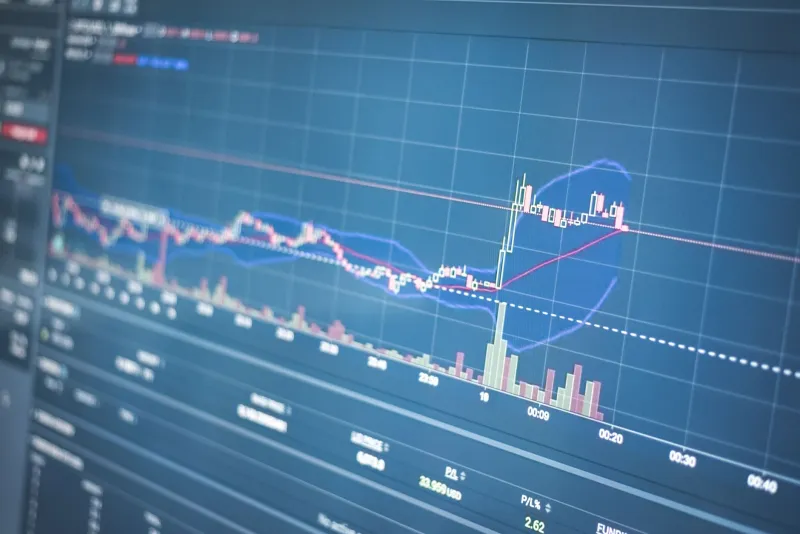
Photo: cryptocurrency exchange crash screen red market data display, via img.freepik.com
It's 2:47 AM on a Tuesday. You've got a live wager running, your crypto collateral is sitting on a major exchange, and suddenly the price of ETH drops 30% in four minutes. The exchange interface freezes. Your stop-loss didn't trigger. By the time the page reloads, your position is underwater and the market has already bounced halfway back.
Welcome to a flash crash. And if you're a crypto bettor who hasn't thought through this scenario, you're playing with fire every single time you log on.
The good news? These moments of market dysfunction aren't just disasters. For bettors who understand what's actually happening under the hood, they're also some of the most exploitable situations in the entire crypto ecosystem. Let's break down how to protect yourself—and how to position for profit when the machines start misbehaving.
What Actually Happens During a Flash Crash
A flash crash isn't random. It almost always follows a predictable sequence, even if it unfolds in seconds.
First, a large sell order—sometimes from a whale, sometimes from an algorithmic liquidation cascade—hits an order book that's already thin. Thin order books are common during off-peak hours or in the lead-up to major news events. When that sell order chews through available bids, the price drops fast. Other automated systems interpret the drop as a signal, triggering more sells. Leveraged positions get liquidated automatically, adding more sell pressure. Within minutes, you've got a self-reinforcing spiral.
Then, just as quickly, it reverses. Buyers who were waiting for a dip scoop up cheap assets, the order book refills, and the price snaps back—sometimes to within a few percentage points of where it started.
The whole episode might last three to eight minutes. But if your collateral or your live bet settlement was priced during that window, three minutes is all it takes to change your day.
Historical Moments That Should Be Required Reading
In May 2021, ETH briefly dropped over 45% on Coinbase during a period of extreme network congestion. Users trying to manage positions couldn't get transactions confirmed. Some bettors using ETH-denominated platforms saw their balances recalculated at crash prices before the market recovered—locking in losses that technically shouldn't have happened.
The 2010 stock market flash crash—yes, before crypto—saw the Dow drop nearly 1,000 points in minutes before recovering. It's worth studying because it exposed exactly how liquidity evaporates and how automated systems can create feedback loops. Crypto markets, which are less regulated and more fragmented, are significantly more vulnerable to the same dynamics.
Bitcoin's infamous "$0.01 trade" on Mt. Gox in 2011 is an older example, but it illustrates a crucial point: when an exchange malfunctions, the prices it reports aren't necessarily real prices. Bettors and traders who acted on those numbers got burned. Those who held still and waited for the market to normalize came out fine.
The lesson in each case is the same—panic is the most expensive reaction you can have.
The Traps That Catch Unprepared Bettors
Let's be direct about the specific ways bettors get hurt during these events.
Collateral denominated in volatile assets. If you're using BTC or ETH as your betting bankroll and the asset crashes mid-session, your effective bankroll just shrank—even if your bets are denominated in USD terms. Some platforms will margin-call your position or restrict withdrawals during extreme volatility.
Exchange API failures. Many sophisticated bettors use API connections to manage positions automatically. During a flash crash, exchange APIs frequently time out or return error codes. If your contingency logic isn't built to handle null responses gracefully, you can end up with unintended open positions or missed executions.
Settlement during the trough. Some platforms settle crypto bets using price feeds that don't account for flash crash anomalies. If your bet resolves at 2:49 AM when ETH is at its lowest, you might receive far less than you expected—even if the price fully recovered by 2:53 AM.
Panic withdrawals into thin liquidity. Trying to move funds off a platform during peak chaos is a great way to pay maximum fees and get worst-case execution. The irony is that the bettors who move fastest during a crash often lock in the worst outcomes.
Building Your Flash Crash Contingency Framework
Here's a practical approach to protecting yourself and positioning for opportunity.
Hold stablecoins as your base layer. USDC or USDT as your primary betting bankroll means your collateral isn't subject to flash crash devaluation. You convert to volatile assets only when you need to, and you convert back quickly. This is the single most effective structural defense.
Know your platform's settlement mechanics. Before you bet serious money anywhere, read the fine print on how prices are determined at settlement. Does the platform use a time-weighted average price? A single snapshot? An oracle feed from a third party? Platforms with TWAP-based settlement are far more resistant to flash crash manipulation than those using spot prices.
Keep a secondary wallet funded and ready. If your primary exchange freezes, having funds on a second platform means you can still act. This is especially valuable if you want to take the other side of a crash—buying assets or placing bets while everyone else is panicking.
Set price alerts, not just stop-losses. Stop-losses can fail or trigger at terrible prices during extreme volatility. Price alerts that notify you of unusual moves give you the option to make a human decision rather than relying on automated execution that may behave unpredictably.
Watch the order book, not just the price. Before you enter any significant position, check whether the order book has enough depth to absorb movement. A thin book at current prices is a warning sign that even moderate selling pressure could send things sideways fast.
The Opportunity Side of the Equation
None of this is to say flash crashes are purely bad news. For bettors who are prepared, they're windows.
Odds on crypto-adjacent events—token price movements, network activity thresholds, protocol milestones—can get dramatically mispriced during a crash as platforms struggle to update their lines in real time. A bettor who knows the underlying asset is likely to recover and can act during the chaos has a genuine edge.
Liquidity also opens up on the recovery. As scared sellers exit and the order book rebuilds, there are often favorable spreads available for a short window. Bettors who understand this dynamic and have capital ready to deploy can essentially bet on mean reversion with better-than-usual odds.
The key distinction is preparation. The bettors who profit from flash crashes aren't guessing—they've already thought through the scenarios, kept dry powder in stable assets, and know exactly what actions they'll take when the market starts doing something weird.
The Bottom Line
Exchange malfunctions and flash crashes are a permanent feature of crypto markets, not a bug that's going away. The infrastructure is getting better, but the combination of global 24/7 trading, algorithmic systems, and fragmented liquidity means these events will keep happening.
The bettors who treat these moments as pure chaos will keep getting hurt. The ones who treat them as predictable—if unpredictable in timing—will keep finding edges that most of the market misses entirely.
At DirectUFABet Crypto, the whole point is to bet direct and move fast. But moving fast in the wrong direction during a flash crash is how you blow up a bankroll. Build the framework first. Then move fast.